Things to Do in Gambia in September
September weather, activities, events & insider tips
Low Season · Budget Friendly
September Weather in Gambia
Long-run averages for September in Banjul
87°F (31°C)
High Temp
72°F (22°C)
Low Temp
10.0 inches (254 mm)
Rainfall
87%
Humidity
11
Sunny-Day UV
⚠ Heavy monsoonal downpours cause localised flooding across Banjul and the coastal towns, around the Albert Market area and low-lying roads between Serekunda and Brikama. If you are driving or taking a taxi, expect diversions and delays after sustained afternoon rain. Plan extra time. Roads flood fast.
⚠ Malaria transmission is at its annual peak in September due to extensive standing water from the rains. Prophylaxis, treated bed nets, and vigilant use of insect repellent are essential, not optional, across the entire country including the coastal tourist strip. Take this seriously. Pack extra repellent.
⚠ Laterite roads upcountry toward Janjanbureh and the Wassu Stone Circles can become impassable after heavy rain. Check conditions before traveling inland and avoid night driving on unsurfaced roads during the wet season. Confirm your route. Hire local drivers.
Making the most of September in Gambia? Browse tours and activities in Gambia on GetYourGuide.
Is September Right for You?
Weigh the advantages and considerations before booking
Advantages
- + Gambia turns impossibly green in September. The scrubby Sahel savanna that looked parched and pale in the dry season erupts into dense, almost tropical foliage along the River Gambia. Birdwatching hits its peak. Palearctic migrants begin arriving from Europe alongside resident species, pushing the count toward 560 plus in a country the size of a large county.
- + Accommodation prices drop to their absolute floor. Resorts along the Kololi and Kotu Beach strips that command premium rates from November through April now run well below half their peak season prices. You can often negotiate further. Occupancy is thin enough that staff will upgrade you just to fill the better rooms.
- + The Atlantic coast and River Gambia shorelines are essentially yours. The Senegambia strip still has enough restaurants and bars open to keep evenings interesting. The beaches at Kotu, Kololi, and Kartong feel private. Cultural sites like Kunta Kinteh Island and the Wassu Stone Circles receive so few visitors that guides give you what amounts to a private tour.
- + September sits in the middle of the growing season. Markets in Serekunda and Banjul overflow with local produce you will not see in the dry months. Fresh mangoes still linger. Bitter tomatoes come in by the basketful. The groundnut harvest is approaching, so the domoda (groundnut stew) at its best is richer and more intensely nutty than what tourist season kitchens serve from older stock.
Considerations
- − This is the second wettest month of the year at 254 mm (10.0 inches). When the rain comes it is not polite about it. Banjul's low lying streets around Albert Market and the ferry terminal regularly flood after heavy downpours. Some upcountry laterite roads become impassable. You can lose an entire afternoon to a storm that turns the sky dark grey at 2 PM and does not let up until dusk.
- − Humidity sits at a relentless 87%. Stepping outside feels like walking into a warm, wet towel. Your clothes never fully dry. The combination of heat and moisture makes any sustained physical effort, hiking, cycling, walking through Serekunda Market, exhausting by midday.
- − Malaria carrying Anopheles mosquitoes hit their annual peak in September. Every puddle, ditch, and rice paddy becomes a breeding ground. Prophylaxis is not optional. Even with it you will spend your evenings reapplying repellent and sleeping under a treated net. Do this properly. The nearest well equipped hospital is the Medical Research Council clinic in Fajara, and getting there from upcountry takes time.
Short on time in September? See day trips around Gambia on GetYourGuide.
Best Activities in September
Top things to do during your visit
September in Gambia means the green season at full force. The landscape along the River Gambia swells into lushness that looks nothing like the parched browns of dry months. Average highs hit 87°F (31°C), lows drop to roughly 72°F (22°C), and rainfall averages about 10 inches across the month. That rain does not fall as a grey curtain day after day. It comes in concentrated afternoon and evening downpours, thick warm sheets hammering corrugated rooftops, filling the bolongs and mangrove creeks to their brims, then giving way to steaming sunshine. The air between storms carries mineral scent of wet laterite, mixed with wood smoke drifting from compound kitchens where women pound benachin rice over charcoal. Mornings often break clear. The sky washes to pale blue-white over Banjul and the coastal towns of Kololi and Kotu Beach. Gambia in September is profoundly quiet by tourism standards. Charter flights from Northern Europe that fill beachfront hotels from November through April haven't started yet, and resorts along the Senegambia strip operate with skeleton crews. Travelers who can handle the heat and a drenched afternoon get rewarded. Nearly private beaches. Unhurried access to every excursion. Prices across hotels and restaurants drop well below high-season rates. The fishing pirogues still launch from Tanji and Gunjur at dawn, dragging nets through grey-green Atlantic swells, and the catch, barracuda, ladyfish, bonga shad, still arrives on smoking grills along the coast by mid-morning. Gambian food culture runs deep even in low season. Domoda peanut stew simmers in palm oil. The sour tang of supakanja okra soup. Grilled oysters harvested from mangrove roots near Lamin Lodge. Restaurants in Serekunda and along the Kololi strip remain open, though some tourist-oriented places may keep shorter hours. Safety concerns weigh on many travelers considering Gambia. Petty crime exists, concentrated in tourist zones of Kololi and Senegambia at night. But violent crime against visitors is rare. The coastal resort areas, Banjul itself, and upcountry towns along the river are generally safe for daytime exploration, with usual precautions about displaying valuables. September's quiet streets reduce hassle from bumsters, the unofficial guides who can be persistent during peak season, simply because fewer tourists means fewer targets. The beaches at Kotu, Sanyang, and Bijilo remain accessible year-round, though September's higher tides and stronger currents mean swimming requires attention to local conditions. Where to stay in Gambia during September depends on your appetite for solitude. The Senegambia area offers the most reliable restaurant and nightlife access. Kotu Beach is quieter with a loyal returning-visitor feel. Banjul itself, while not a beach town, puts you closest to the ferry terminal and the river.

Full-Day Safari in Senegal from Banjul
day_tripThe Full-Day Safari in Senegal from Banjul begins before sunrise with a drive north to the Gambian border, then a crossing into Senegal's Fathala Forest and the wildlife reserve that occupies its southern edge. This is West Africa's most accessible big-game encounter. Rhinoceros relocated here from South African breeding programs stand in shade of kapok trees. Giraffes move through dry woodland with slow deliberation that seems choreographed. Giant eland, the world's largest antelope with spiraling horns and dewlaps like theatre curtains, graze in clearings where red earth shows through grass. The return route typically passes through small Senegalese villages where smell of attaya tea brewing on charcoal and sound of Wolof conversation spill from open doorways.
A single day gets you face-to-face with savannah megafauna that most travelers associate with East or Southern Africa, reached by a cross-border journey that doubles as cultural immersion along the Senegambia corridor.
Insider tip: Bring a rain jacket rather than an umbrella. The open-top safari vehicles used at the reserve leave you exposed during September's afternoon showers, and the guides will not cut the drive short for weather.
This month: September's heavy rains turn the reserve's landscape intensely green with thick undergrowth, which can make spotting smaller wildlife more challenging but transforms the scenery into something dramatically different from the dry-season brown that most safari photos show.

Gambia to Senegal Tour with Ferry Crossing and Safari Park
guided_experienceThe Gambia to Senegal Tour with Ferry Crossing and Safari Park turns one of West Africa's great everyday transport experiences, the Banjul-Barra ferry, into the opening act of a cross-border day. The ferry itself is an event. A rusting, overladen vessel carrying trucks, taxis, goats, and passengers across the mouth of the River Gambia while pelicans wheel overhead and salt-heavy breeze off the Atlantic cuts through engine exhaust. Once across, the route pushes into Senegal toward a wildlife park where you walk elevated boardwalks through forest and encounter hyenas, monkeys, and large cats in semi-wild enclosures that feel closer and less mediated than a traditional drive-through reserve.
The ferry crossing alone, the press of bodies, the creak of the ramp, the slow churn across brown river water, is one of the most authentic slices of daily Gambian life you can witness, and the safari on the far side gives the day a second act.
Insider tip: Sit on the upper deck of the ferry on the port side heading north for the best view of Banjul's waterfront receding. The lower vehicle deck is loud, diesel-fumed, and offers no vantage.

MAKASUTU - cultural forrest, Brikama
otherMakasutu Cultural Forest sits in the tangle of mangrove and palm forest behind Brikama, and entering it feels like stepping through a membrane into a Gambia that predates the coastal hotels by centuries. The forest is managed as a cultural and ecological preserve. Walkways thread through gallery forest where canopy closes overhead and light drops to green-filtered dimness, broken by shafts of sun that catch iridescent flash of a violet turaco or darting orange of a weaver bird building its hanging nest. Guides from surrounding villages lead visitors to sacred sites, demonstrate traditional palm-wine tapping, cutting into the crown of a palm and collecting sweet, faintly yeasty sap into a calabash, and paddle dugout canoes through the mangrove bolongs where mudskippers flop along exposed roots and water smells of tannin and salt.
Makasutu is the single best place in Gambia to understand how forest, river, and human culture intertwine in the Mandinka and Jola traditions that shaped this country long before anyone drew a border.
Insider tip: Wear shoes you do not mind getting muddy and bring insect repellent with a high DEET concentration. September's wet conditions mean the mosquitoes in the forest interior are relentless from late afternoon onward.
This month: September's rains raise the water level in the bolongs significantly, making the dugout canoe sections longer and more navigable than during the dry months when some channels become impassable mudflats.

Airport pickup
transportThe Airport Pickup service covers the transfer from Banjul International Airport at Yundum to hotels along the coast, a short distance on the map but a potentially disorienting arrival for first-time visitors. The airport terminal is small, warm, and thick with smell of floor polish and diesel from generators that kick in during power cuts. Outside, the car park is a press of unofficial taxi touts, guides calling out hotel names, and heavy sweetness of flowering frangipani along the exit road. Having a driver holding your name on a card, with an air-conditioned vehicle waiting, eliminates the negotiation dance and the risk of paying several times the going rate for a taxi to Kololi or Senegambia.
A pre-arranged airport transfer removes the single most stressful moment of arriving in Gambia, the gauntlet of touts outside the terminal, and gets you to your hotel in cool comfort rather than in a shared taxi with uncertain routing.
Insider tip: Confirm with the driver that the vehicle has functioning air conditioning before you depart the terminal. September's heat combined with humidity inside a non-cooled car on even a 30-minute drive can be oppressive.

South Gambia Tour - Fishing village and Paradise Beach
guided_experienceThe South Gambia Tour to the Fishing Village and Paradise Beach heads south from the tourist strip into a Gambia that most package visitors never reach. The fishing village, typically Gunjur or Tanji, operates with raw, kinetic energy. Women sort the catch into baskets balanced on their heads. The air is sharp with salt and fish oil. Smoke rises from rows of drying racks where bonga shad cure slowly over smoldering wood. The sound is continuous negotiation in Mandinka and Wolof punctuated by slap of fish on wooden tables. Paradise Beach, reached after the village, is a long crescent of pale sand backed by low scrub and casuarina trees, facing an Atlantic that in September rolls in with grey-green muscular swell quite different from calm turquoise of dry months. The beach is largely empty this time of year. A few fishermen mending nets, perhaps a group of local children.
This tour compresses two entirely different sensory worlds, the overwhelming intensity of a working West African fish landing site and the solitary calm of an undeveloped beach, into a single half-day that reframes what Gambia means beyond the hotel strip.
Insider tip: Bring a bandana or scarf you can hold over your nose at the fish-smoking section of the village. The smoke is thick, acrid, and clings to clothing for hours afterward.
This month: September's seas are rougher than the dry-season norm, and the fishing pirogues launching and landing through the surf are a more dramatic spectacle than during calmer months, though swimming at Paradise Beach requires caution due to stronger currents and undertow.

Safari adventure at Fathala Wildlife Reserve in Senegal
otherThe Safari Adventure at Fathala Wildlife Reserve in Senegal is the most intimate of the cross-border wildlife options available from Gambia. Fathala sits in a tract of dry deciduous forest that in September is at its most overgrown and theatrical. Vines drape from baobabs. The undergrowth is chest-high in places. The air under the canopy is still and warm with smell of damp bark and decomposing leaves. The reserve's headline encounter is a walking safari alongside white rhinoceros, accompanied by an armed ranger who keeps a measured distance while you move on foot through terrain the animals treat as home. The proximity is startling. The rough, plated texture of a rhino's skin. The sound of its breathing, a slow, resonant huff. The surprisingly delicate way it tears grass with a broad square lip. Details no vehicle-based safari can deliver.
Walking alongside rhinoceros in a West African forest is an experience available almost nowhere else on the continent, and Fathala's small-group format means you are not competing with a convoy of other vehicles for sightlines.
Insider tip: The walking portion covers uneven ground that becomes slick after rain. Wear ankle-supporting boots rather than trainers, and expect to get your feet wet crossing seasonal streams that do not exist during the dry months.
This month: The reserve's seasonal streams and waterholes are full in September, which concentrates wildlife around fewer drinking points and can improve sightings of smaller species like bushbuck and warthog that scatter more widely when water is abundant everywhere later in the rains.
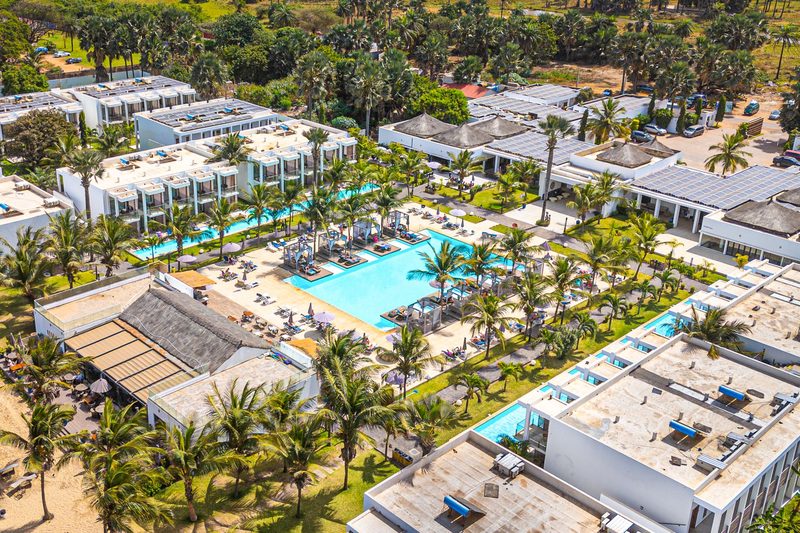
Where to Stay in Gambia in September
Hand-picked hotels across price tiers for September travellers.
Packing Checklist
Bookmark this page — your progress is saved between visits
Need the full list with shopping links?
Climate-specific gear, brand recommendations, and what to leave at home.
View Gambia Packing List →Essential Tips
Insider knowledge and common pitfalls to avoid
Insider Knowledge
September windows for outdoor activity are narrow. Mornings from 6:30 to 10:30 AM stay clear and warm. By early afternoon, skies darken. Storms roll in from the east. Locals build their days around this pattern. Markets happen before noon. Shade calls after. Follow their rhythm. Do not fight midday heat.
Serekunda Market rewards September visitors. You see it working for Gambians, not tourists. Head to the smoked-fish section at the back. Bonga fish stack on wire racks over smouldering mangrove wood. The alley fills with thick, salty, wood-smoke haze. This is the market's authentic core. Most tourists walk straight past. You will likely be the only foreigner there. Vendors relax outside high season. They chat more. They hard-sell less.
Seek out domoda in September. This groundnut stew defines Gambian cooking. It arrives over white rice with bitter tomato on the side. Timing matters. September precedes the new harvest. Kitchens use last season's crop. Those groundnuts have aged for months. The flavour deepens. Concentrates. Find it in Bakau's backstreet chop shops. Skip the Senegambia strip hotels. They thin it down for foreign palates. The real version waits elsewhere.
Check road conditions the morning you travel. Do not rely on yesterday's report. The south bank road floods after sustained September rain. Passable at dawn becomes impassable by afternoon. Headed to Wassu Stone Circles or Janjanbureh? Plan for this. North bank shared taxis prove more reliable in wet season. Drivers know which stretches to dodge. Allow double dry-season time. Any journey over 100 km (62 miles) demands patience.
Avoid These Mistakes
Do not let rain cancel your day. September storms hit intense and brief. Afternoons and evenings see the worst. Mornings stay clear. These are among the most pleasant hours in Gambia. Travellers who hide at 3 PM miss everything. The 7-to-10 AM window brings fresh air. Soft light. Active birdlife. Get out early.
Pack for more than beaches. Gambia's interior outshines the coast in September. The River Gambia runs full. Nature reserves burst with green. Stone circles upcountry sit in lush surroundings. This is the landscape at its peak. Wildlife shows itself. Kololi-Kotu beach strip offers the least interesting version of the country. September makes it worse. Move inland.
Take malaria prophylaxis. No exceptions. September is peak transmission month. Standing water pools from coast to interior. Anopheles mosquitoes carry Plasmodium falciparum. This strain kills. They hunt from dusk to dawn. Coastal areas are not safe. The Medical Research Council in Fajara provides excellent care. It exists because malaria remains a serious, present threat across this part of West Africa.
Ready to plan your trip to Gambia?
Now that you've got the research covered, here's where to go next.
Explore More Activities in Gambia
Didn't see anything interesting yet?
Browse Viator's full catalog of tours, day trips, food experiences, and private guides in Gambia.
See All Gambia Tours on Viator