Things to Do in Gambia in February
February weather, activities, events & insider tips
High Season · Book Early
February Weather in Gambia
Long-run averages for February in Banjul
92°F (33°C)
High Temp
61°F (16°C)
Low Temp
0.0 inches (0 mm)
Rainfall
44%
Humidity
10
Sunny-Day UV
⚠ Sustained heat with no cloud cover through most of February. Banjul averages 33 degrees C (92 degrees F) at the daily peak, and the interior can push higher. Drink water continuously, carry oral rehydration salts, and watch for signs of heat exhaustion, during river excursions where reflected sunlight compounds the exposure.
⚠ Malaria is present year-round. February's dry conditions reduce but do not eliminate mosquito populations, near creek beds, mangrove edges, and standing water in urban drains. Antimalarials are strongly recommended, and dusk-to-dawn precautions including repellent and sleeping under a treated net remain essential even in air-conditioned hotels.
Making the most of February in Gambia? Browse tours and activities in Gambia on GetYourGuide.
Is February Right for You?
Weigh the advantages and considerations before booking
Advantages
- + Zero rainfall and low humidity make February one of Gambia's two driest months. Every outdoor plan runs without weather interruption, from river cruises to beach days. The Harmattan haze thickens in December and January. By mid-February, it has largely cleared. Visibility sharpens over the Gambia River and the Atlantic coast alike.
- + Peak birdwatching season is in full swing. Palearctic migrants from Europe overlap with resident West African species. The country's bird count pushes past 560 in an area smaller than Connecticut. Waterholes shrink along the river's tributaries. They concentrate waders, raptors, and kingfishers into tight viewing corridors. Kotu Creek, Abuko Nature Reserve, and Tanji Bird Reserve are prime spots.
- + Independence Day falls on February 18. It gives travelers a rare window into Gambian civic life. The military and school parade at McCarthy Square in Banjul. Drumming circles spill into surrounding streets. Communal cooking takes over neighbourhood compounds. This is cultural access no organised tour can replicate.
- + The dry season brings the full fleet of river and mangrove boat excursions online. Operators run pirogue trips through the bolongs. These tidal creeks thread the mangrove forests south of Brikama. Multi-day upriver journeys to Janjanbureh pass through stretches where hippo pods surface at dawn. Vervet monkeys line the riverbank like commuters waiting for a bus.
Considerations
- − Ramadan is expected to begin around February 7 or 8, 2027. The Supreme Islamic Council announces the moon sighting. The Gambia is roughly 95 percent Muslim. Daily life shifts. Markets in Serekunda open later and close earlier. Taxi drivers may be less available during late afternoon as energy dips. Communal iftar meals at sundown create traffic snarls around mosques. Tourist hotels and beach restaurants operate normally. Eating or drinking conspicuously in public outside resort areas during daylight hours is considered disrespectful.
- − February is peak season for European charter tourism. The Senegambia Strip in Kololi fills up. Kotu Beach and the stretch between Bijilo and Cape Point do too. Accommodation along the Atlantic coast books out weeks ahead. Mid-range lodges and eco-camps go first. Expect to share Abuko's forest trails with guided tour groups most mornings.
- − Daytime heat is serious. Banjul's February average high sits at 33 degrees C (92 degrees F). In the interior, along the river east of Kuntaur, afternoon temperatures push higher with little shade. The 17-degree swing between midday peak and nighttime low of 16 degrees C (61 degrees F) catches travelers off guard. A fleece or light jacket is necessary after dark.
Short on time in February? See day trips around Gambia on GetYourGuide.
Best Activities in February
Top things to do during your visit
February hits Gambia at the dry season's core. The sky stays unbroken blue from dawn to dusk. The air carries mineral warmth off laterite roads. Daytime temperatures reach 33°C (92°F), dry heat that presses hard until sunset drops it to 16°C (61°F). No rain falls. Not one millimetre. Humidity bottoms out at 44 percent. For travellers asking about February weather in Gambia: hot days under empty skies, cool evenings, and a landscape that has swapped wet-season green for tawny savannah and stripped baobabs. Their silhouettes look charcoal-drawn against the sunset. The dry shapes everything. The River Gambia runs lower and slower. Birdlife concentrates along shrinking pools and mudflats. Gambia ranks among West Africa's top birding destinations. February sits inside the window when Palearctic migrants, warblers, terns, harriers, overlap with residents like the Abyssinian roller and violet turaco. Along the coast, from Kololi south to Sanyang, the Atlantic meets wide amber beaches with little swell. Sand warms underfoot by mid-morning. Fishing pirogues line Tanji and Gunjur shores, hulls painted in fading blues and greens. Smoked bonga fish drifts from curing racks behind the beach. Tourist season peaks now. Restaurants and juice bars along Senegambia Strip stay open late, grilling barracuda and serving attaya, sweet foamy green tea brewed in three rounds that punctuates every Gambian afternoon. Safety is straightforward for visitors with ordinary urban awareness. Coastal tourist areas are well-patrolled. Locals are famously welcoming. That reputation was earned over decades, not borrowed from brochures. Accommodation spans the range. Guesthouses in Bakau wake you to roosters and the muezzin's call. Resort compounds along Kololi beachfront catch early light in their pools. Eating well in Gambia means domoda, thick slow-cooked groundnut stew over rice, the peanut deep and savoury, and benachin, original jollof rice, tomato-stained and fragrant with dried fish and scotch bonnet. Serekunda street stalls serve these for next to nothing. Kotu and Kololi beachfront restaurants offer grilled seafood and cold Julbrew lager with sand between your toes.

Full-Day Safari in Senegal from Banjul
day_tripThe Full-Day Safari in Senegal from Banjul starts early, when air still holds the previous night's coolness. You cross into Senegal and head for Fathala Wildlife Reserve. Vehicle tracks cut through dry woodland and open savannah. Giraffes move with improbable slow-motion grace between trees. White rhinos, reintroduced and thriving, stand in shade like boulders that decided to breathe. February light is exceptional: sharp, golden, low enough in morning hours to throw long shadows that make every animal photograph look composed. Sun-baked earth and acacia bark scent fills the open vehicle. Between sightings, only birdsong and dry leaves crunching beneath tyres. Lunch is typically included, served in open-air lodge where you taste grilled chicken with onion sauce and listen to distant Guinea baboon whoops.
A border-crossing safari that puts you among giraffes and rhinos within two hours of your Gambian hotel, with intimate scale that larger East African parks cannot match.
Insider tip: Sit on the left side of the vehicle for best morning light on animals. Bring a buff or bandana because laterite dust on unpaved stretches coats everything.
This month: February's bone-dry conditions mean animals cluster around the reserve's remaining water sources, making sightings more predictable than during wet months when they disperse.

Gambia to Senegal Tour with Ferry Crossing and Safari Park
guided_experienceThe Gambia to Senegal Tour with Ferry Crossing and Safari Park folds two countries into one day. It starts with a crossing that is an experience itself. The Banjul-Barra ferry churns across the river mouth. Its deck crowds with traders balancing mango baskets on heads, minibuses lashed to lower deck, salt-tinged breeze cutting through diesel fumes. You hear water slap against hull, Wolof and Mandinka conversations murmuring around you. Once across in Senegal, the route leads through small towns where red-earth roads line with cashew trees before reaching a safari park for game viewing. The combination of working ferry crossing, not tourist replica but actual lifeline between north and south banks, and wildlife encounter gives this tour texture that simple game drive cannot.
The ferry crossing alone is worth the day, raw, sensory immersion in West African river life that frames the safari as part of larger cross-border journey, not sealed tourist bubble.
Insider tip: Carry small notes in local currency for snack vendors on ferry deck. Grilled cashews sold in twisted newspaper cones are warm, salty, and addictive.

MAKASUTU - cultural forrest, Brikama
otherMAKASUTU - cultural forrest, Brikama drops you into palm forest along a River Gambia tributary where canopy closes overhead and temperature falls several degrees instantly. Inside Makasutu, air hangs thick with green vegetal scent of oil palms and damp earth beneath, sharp contrast to dry heat outside. Guides, most from surrounding villages, walk you through cultural demonstrations: kora players whose cascading notes echo off palm trunks, cloth-dyeing workshops where indigo paste stains fingers blue for days. A pirogue ride along the creek rounds out the visit. The flat-bottomed boat slides past mangrove roots where mudskippers flick across exposed mud and kingfishers flash electric blue between branches. In February, creek level sits low enough that mangrove roots are fully exposed, revealing tangled architecture normally submerged.
The only place in Gambia where walk through living forest, live traditional music, and creek-level pirogue ride converge in single half-day visit, all within reach of the coast.
Insider tip: Wear closed-toe shoes with grip, forest paths are uneven and pirogue embarkation involves stepping across slippery mud at low tide.
This month: Low water levels in February expose more mangrove root systems along creek, and reduced canopy moisture means fewer mosquitoes than during wet season.

Airport pickup
transportAirport pickup covers transfer from Banjul International Airport to coastal accommodation. It sounds purely logistical. Arriving in Gambia after dark, when roadside is lit only by charcoal-grill smoke and bush taxi headlights, can disorient. A pre-arranged driver meets you in arrivals hall, small enough that you smell warm tarmac through open doors, and navigates coastal road through Serekunda's evening traffic: sensory crush of car horns, Afrobeats from shopfront speakers, glow of phone-charging kiosks. Having that sorted before landing means your first Gambian experience is watching scenery rather than negotiating fare.
Reliable, pre-booked transfer that removes single most stressful moment of arriving in unfamiliar West African country, on late-evening flight.

River cruise Fishing in the Gambia Lunch Included
cruiseRiver cruise Fishing in the Gambia Lunch Included takes you upriver from coast into wide, slow-moving middle reaches of River Gambia, where water is tea-coloured with tannins and banks fringe with mangroves and raphia palms. In February, river sits well below August peak, and shallower water concentrates catfish, tilapia, and barracuda into deeper channels. You fish from boat with hand lines or light tackle, no industrial gear, no sonar, and sensation is of older, slower angling where you feel line tighten through fingers before anything else. The quiet is notable: just lap of water against hull, occasional splash of jumping fish, distant cry of fish eagle circling overhead. Lunch is cooked on board or at riverside stop, often morning's catch grilled over charcoal with lime and chilli, flesh flaking white and smoky.
Half-day on river that strips fishing back to essentials, hand lines, local knowledge, and lunch cooked from whatever you pulled from water an hour earlier.
Insider tip: Bring polarised sunglasses, glare off water in February's cloudless conditions is intense, and seeing below surface helps spot fish movement near boat.
This month: February's low river levels concentrate fish into deeper pools and channels, improving catch rates compared to high-water months when fish disperse across flooded plain.

South Gambia Tour - Fishing village and Paradise Beach
guided_experienceSouth Gambia Tour - Fishing village and Paradise Beach heads away from resort strip and down coast to villages and sand stretches most visitors never reach. The fishing village, likely Tanji or Gunjur, is full-volume sensory experience: air sharp with salt and woodsmoke from fish-smoking platforms, women sorting morning catch into gleaming silver piles on sand while pirogues painted in sun-faded primaries ride small surf just offshore, sound a wall of shouted Wolof, creaking rope, squalling gulls. It is not curated. It is not quiet. That is exactly the point. From there, tour continues to one of undeveloped beaches south of Gunjur, long pale sand backed by scrubby dunes, no sunbeds, no vendors, where Atlantic rolls in warm and only footprints are yours and ghost crabs'. February's dry weather and calm seas make swimming comfortable and fishing-village activity peaks, since boats go out daily without rain interruption.
The fishing village delivers unfiltered West African coast, noise, smell, colour, commerce, while beach that follows offers opposite: silence, space, and empty sand stretching to horizon.
Insider tip: Ask guide if you can buy fish directly from women sorting catch, they will often grill them for you on spot at smoking area for small fee, and taste of fresh-landed sole cooked over palm-wood coals is incomparable.
Where to Stay in Gambia in February
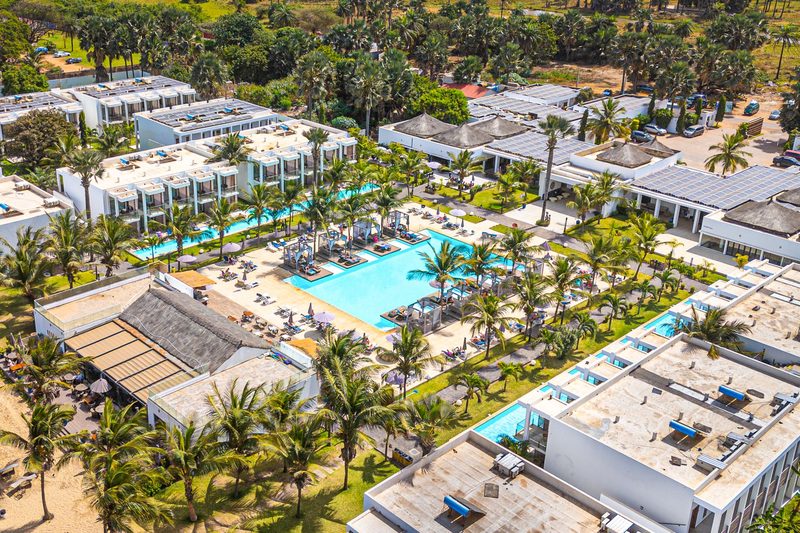
Hand-picked hotels across price tiers for February travellers.
Public Holidays in February
Dates that affect opening hours, transport and crowds
Independence Day
Observed nationwide as a public holiday.
Independence Day
Observed nationwide as a public holiday.
Packing Checklist
Bookmark this page — your progress is saved between visits
Need the full list with shopping links?
Climate-specific gear, brand recommendations, and what to leave at home.
View Gambia Packing List →Essential Tips
Insider knowledge and common pitfalls to avoid
Insider Knowledge
The best domoda in the country is not in a restaurant. It is in the compound kitchens of Bakau and Serekunda. Neighbourhood women cook for extended families in pots the size of truck tyres. If your hotel employs Gambian staff, ask whether any family is hosting a naming ceremony or gathering during your stay. Guests are almost always welcome. The food is extraordinary. The communal bowl tradition means you eat alongside everyone else with your right hand and a shared spoon. The flavour of home-cooked domoda will spoil you for any restaurant version. The peanut paste is ground fresh. The palm oil has that deep, amber richness that bottled versions never match.
Skip the Banjul city tour by taxi. Take the Banjul Ferry from Barra instead, arriving from the north bank. The crossing takes about 45 minutes. The lower deck is a chaos of goats, motorcycles, and women carrying basins of smoked bonga fish on their heads. The upper deck gives you Banjul's waterfront skyline framed by pelicans. The return overland via the Denton Bridge road passes through the fishing village of Old Jeshwang. The catch comes ashore around 4 PM. The scene smells like salt and diesel and looks like a painting.
February's evening attaya sessions are the Gambian equivalent of a pub. Groups of men (and increasingly women) brew the intensely sweet green tea in three rounds on tiny charcoal stoves set up on the pavement outside homes and shops. Each round gets sweeter and weaker. Sitting in on one is free. It is expected. It is the single fastest way to have a real conversation with Gambians outside the tourism economy. The first round is bitter enough to make you wince. Stay for the third.
The so-called bumsters, young men who approach tourists on the beach and at hotel gates offering guide services, friendship, or companionship, are Gambia's most discussed tourist-interaction issue. The government has cracked down with tourist police patrols along Kololi and Kotu, and the situation has improved considerably. The honest approach: a firm but polite refusal works. If you do want a local companion for a market visit or village walk, arrange one through your hotel rather than accepting offers on the beach, and agree on terms beforehand.
Avoid These Mistakes
Underestimating the midday heat and scheduling outdoor activities between noon and 3 PM. Gambia in February bakes under a cloudless sky, and the interior is even hotter than the coast. The smartest move is the same one locals make: mornings for activity, midday for shade and attaya, afternoons for the beach where the Atlantic breeze takes the edge off, and evenings for the Senegambia Strip or Serekunda's street food stalls.
Eating and drinking openly outside resort areas during Ramadan daytime hours. Tourist hotels serve food all day without issue. But walking through Serekunda market eating a sandwich or sipping a water bottle during fasting hours draws stares and genuine offence. Carry water discreetly, eat at your hotel, and wait until you are back in the resort zone.
Paying in euros or pounds without checking the exchange rate. The Gambian dalasi fluctuates, and the exchange offered at tourist-facing shops and by street money changers along the Senegambia Strip is consistently worse than the rate at a bank or official bureau de change in Serekunda. Change money at a bank, keep small dalasi notes for taxis and markets, and negotiate all prices in dalasi rather than foreign currency.
Ready to plan your trip to Gambia?
Now that you've got the research covered, here's where to go next.
Explore More Activities in Gambia
Didn't see anything interesting yet?
Browse Viator's full catalog of tours, day trips, food experiences, and private guides in Gambia.
See All Gambia Tours on Viator