Things to Do in Gambia in May
May weather, activities, events & insider tips
Low Season · Budget Friendly
May Weather in Gambia
Long-run averages for May in Banjul
89°F (31°C)
High Temp
68°F (20°C)
Low Temp
0.1 inches (3 mm)
Rainfall
72%
Humidity
11
Sunny-Day UV
⚠ Extreme UV exposure throughout the day. Hours on open water, exposed beaches, or shadeless market streets without high-SPF sunscreen and head coverage will result in serious sunburn. The reflected glare off the river surface intensifies the effect on boat trips. Pack a hat. Reapply often.
⚠ The combination of 31°C (89°F) heat and 72% humidity creates conditions where heat exhaustion can set in faster than travelers from temperate climates expect. Carry water at all times. Watch for headaches or dizziness in the early afternoon. Take the midday rest that every Gambian takes for a reason.
⚠ Malaria-carrying mosquito populations increase in May as humidity rises ahead of the rainy season. Prophylaxis, DEET-based repellent, and long sleeves after dusk are essential. Not optional. The risk is real and present in both rural areas and the coastal hotel zone.
Making the most of May in Gambia? Browse tours and activities in Gambia on GetYourGuide.
Is May Right for You?
Weigh the advantages and considerations before booking
Advantages
- + May marks the final dry stretch before the June-October monsoon. You will enjoy clear skies nationwide. Humidity rises steadily. It stays far below July and August extremes. Reach the Wassu Stone Circles today. Paved routes remain clear. Flooded laterite tracks cause zero trouble.
- + Low season prices apply to accommodation and tours. The European winter-sun crowd packs coastal hotels from November through April. That group has flown home. Rates at beach-front lodges along the Kololi and Kotu strips drop noticeably. You can negotiate better deals on guided excursions. Operators need empty seats filled.
- + Resident bird species enter breeding plumage. They become far more vocal. African Paradise Flycatchers trail long tail feathers through the canopy at Abuko Nature Reserve. Village Indigobirds flash iridescent blue-black along Kotu Creek. White-throated Bee-eaters stage courtship flights above the river bolongs. The birding differs from peak winter season. It remains equally rewarding.
- + The landscape shifts from dry-season brown to the first greens. Approaching rains drive this change. Early mango season piles markets with fruit. The late afternoon light turns the River Gambia a deep amber. Dry-season haze never allows this glow.
Considerations
- − The combination of 31°C (89°F) highs and 72% humidity creates heavy, sticky heat. It hits hardest between noon and three. Walking through Serekunda Market drains you quickly. Crossing the open ground around Albert Market in Banjul during those hours will wear you out. Shade remains scarce outside hotel compounds. Pack water.
- − Tourist infrastructure winds down for the off-season. Some restaurants along the Senegambia strip reduce hours or close entirely through summer. Craft vendors thin out. A handful of smaller lodges shut doors until November. You will not find the same breadth of evening options. January offered more.
- − The Palearctic migratory birds that draw serious birders from Europe have departed for northern breeding grounds. Your trip focuses on raptors, waders, and European winter migrants. November through March is the window. May is the wrong month.
Short on time in May? See day trips around Gambia on GetYourGuide.
Best Activities in May
Top things to do during your visit
May lands on the cusp of the seasons in Gambia, a week or two before the first real rains sweep in from the Atlantic. The air thickens. Daytime temperatures hold around 31 degrees Celsius, warm enough that the shade of a kapok tree feels like a gift, while nights settle near 20 degrees, cool enough to sleep without rattling an air-conditioning unit all night. Rainfall is negligible, barely three millimetres across the entire month, which means the laterite roads through the bush stay firm, river crossings stay passable, and the long golden beaches along the coast from Kololi south to Sanyang keep their dry-season width. If you have been wondering what the weather is like in Gambia in May, the short answer is hot, dry, and transitional, with rising humidity that you will feel most in the late afternoon, when the breeze off the ocean dies and the mangrove creeks exhale a brackish, vegetal warmth. What makes May feel different from the peak tourist months of November through April is the quiet. Charter flights from Europe thin out. The beachfront hotels along Senegambia Strip drop their rates and their crowds. Restaurants in Kololi and Kotu still serve fire-grilled barracuda and domoda, the rich groundnut stew that stains your fingers orange. But you will eat without a wait. Safety for visitors remains comparable to the dry-season months; Gambia is a small, hospitable country where the main precautions are the same ones you would take in any West African coastal state, with petty theft the primary concern in tourist zones and virtually no risk outside them. The beaches at this time of year are wide, pale, and mostly yours. You can walk the strand at Kotu from the river mouth past the fishing boats hauled up on the sand, the air carrying charcoal smoke and the tang of drying fish, without passing another tourist for a kilometre. For travelers who want Gambia's warmth, its birdlife, and its easy overland access to Senegal without the high-season markup, May is a shrewd window. The transition also means the landscape has not yet turned. The interior bush remains tawny and sparse, which is good for wildlife spotting because animals congregate at the remaining water sources rather than dispersing into thick green cover. Birdwatchers will notice the first Palearctic migrants arriving, and the resident species, from the grey-headed kingfisher to the Abyssinian roller, are conspicuous along the river bolongs. The food scene along the coast leans into local catches: ladyfish, butterfish, and the occasional giant African threadfin pulled from the surf and grilled over halved oil drums on the beach, the flesh white, flaky, and faintly smoky. Hotels in the Senegambia and Bijilo corridor still operate at full service and offer far better value than the December peak. Restaurants in Serekunda and Banjul serve thieboudienne, yassa chicken bright with lemon and onion, and benachin in portions meant for sharing. Gambia in May rewards the traveler who values atmosphere over spectacle, and who can read the season between the lines.

Full-Day Safari in Senegal from Banjul
day_tripThe Full-Day Safari in Senegal from Banjul begins with an early-morning crossing of the Gambia River by road, winding south through cashew orchards and small Mandinka villages where roosters scratch in red dust and the smell of burning groundnut shells hangs in the still air. The route enters Senegal's Fathala Reserve, where the vehicle slows to a crawl on sandy tracks through dry woodland, and guides point out roan antelope, Derby eland, and, if the light cooperates, a rhinoceros standing motionless in dappled shade. The return journey follows the river, and by late afternoon you are watching the banks slide past from a pirogue, the water flat and copper-coloured under the low sun.
This is the most efficient way to see large savannah mammals from a Gambian base, with the border crossing and logistics handled entirely by the operator.
Insider tip: Sit on the left side of the vehicle during the morning drive for the best angle on the watering holes, and carry a scarf to cover your nose on the dusty stretches before the reserve gate.

Gambia to Senegal Tour with Ferry Crossing and Safari Park
guided_experienceThe Gambia to Senegal Tour with Ferry Crossing and Safari Park takes a different route than the overland safari, loading passengers onto the creaking Banjul-Barra ferry, where you stand at the rail watching pelicans skim the brown water and the Banjul skyline shrink behind you. The ferry ride itself is an experience in miniature Gambian life: traders balancing baskets of mangoes on their heads, goats tethered to railings, the smell of diesel and salt. On the Senegalese side, the tour continues to a wildlife reserve where walking trails bring you close to giraffes, hyenas, and monkeys in a fenced but spacious bush setting.
The ferry crossing alone is worth the trip, a noisy, chaotic, memorable slice of West African river life that no landlocked safari can replicate.
Insider tip: Bring small denominations of Gambian dalasi for snacks sold on the ferry deck, and wear shoes you do not mind getting dusty on the walking trails in Senegal.

MAKASUTU - cultural forrest, Brikama
otherMAKASUTU cultural forrest, Brikama sits in a palm-dense river valley about an hour south of the coastal hotels, and entering it feels like stepping from the wide-open Gambian laterite into a green corridor where the canopy closes overhead and the air drops several degrees. Guides from the local Mandinka and Jola communities lead walks along creekside boardwalks, past sacred sites marked with cloth offerings, through galleries of rhun palms whose fronds rattle in the faintest breeze. You hear the knock of a woodpecker on dead wood, the trill of sunbirds in flowering bushes, and, when the guide stops the group, the low drone of a thousand insects filling the silence. A pirogue ride through the mangrove bolongs rounds out the visit, the paddle dipping without sound into tea-dark water.
Makasutu is the most immersive forest and cultural experience within easy reach of Gambia's coast, rooted in genuine community stewardship rather than commercial staging.
Insider tip: Wear long sleeves and trousers despite the heat. The creek-side mosquitoes are persistent even during the day, and the forest trails have thorny scrub at ankle height.

Airport pickup
transportThe Airport pickup service meets you at Banjul International Airport, where the arrivals hall is small, warm, and hectic with competing taxi touts calling out hotel names. Having a driver with a sign and a confirmed vehicle waiting outside cuts through the scrum entirely. The drive from the airport to the main hotel strip along Senegambia takes roughly twenty minutes along a paved road lined with baobabs and roadside stalls selling cashews and bissap juice, the deep-red hibiscus drink that tastes tart and floral and cold if you are lucky enough to get one with ice.
Arriving in Gambia after dark or on a first visit, a pre-arranged transfer eliminates the one stressful moment of the trip and sets the tone for the stay.
Insider tip: Confirm your flight number and arrival terminal with the operator twenty-four hours before landing; Banjul's small terminal occasionally shifts international arrivals without notice.

South Gambia Tour - Fishing village and Paradise Beach
guided_experienceThe South Gambia Tour to the Fishing village and Paradise Beach heads away from the tourist corridor into the stretch of coast south of Tanji, where the fishing village is a wall of sound and smell that hits you before you see it. Hundreds of painted pirogues line the shore, their hulls bright blue, yellow, and green against the pale sand, while women carry silver-scaled fish in enamel basins on their heads and men haul nets heavy with the morning catch, the air thick with brine and woodsmoke from the curing racks. Paradise Beach, a few kilometres further south, is the inverse: a long, quiet crescent of sand backed by casuarina trees, where the only sound is the surf and the occasional call of a fish eagle overhead.
The contrast between the roaring, pungent energy of a working Gambian fishing village and the solitude of an empty tropical beach, separated by a short drive, is sharper than anything on the tourist strip.
Insider tip: Bring a waterproof bag for your phone at the fishing village. The spray from gutting tables and the general chaos of unloading make splashes inevitable, and the fish oil does not wash out of electronics.

Safari adventure at Fathala Wildlife Reserve in Senegal
otherThe Safari adventure at Fathala Wildlife Reserve in Senegal is a tighter, more focused wildlife encounter than the broader full-day safaris, concentrating on Fathala's walking trails and vehicle circuits through dry deciduous woodland where the trees are leafless enough in May to open long sight lines. The reserve holds one of West Africa's few populations of white rhinoceros, and sightings are common because the animals stay near the permanent water pans when the bush is dry. You walk portions of the trail on foot with an armed ranger, close enough to hear a warthog snort and crash through the undergrowth, close enough to smell the warm dung of an eland herd that passed minutes before. Giant baobabs punctuate the flat terrain, their grey trunks smooth and cool to the touch.
Fathala offers the closest thing to an East African walking safari experience anywhere in West Africa, with rhinoceros sightings that are rare on the continent outside southern reserves.
Insider tip: Carry binoculars even on the walking portions. The guides tend to move quickly between sighting points, and a good pair lets you linger on animals the group has already passed.
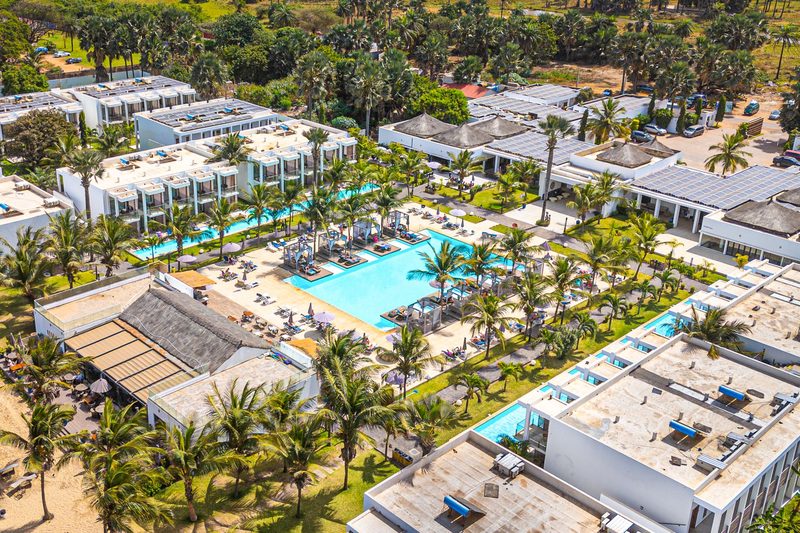
Where to Stay in Gambia in May
Hand-picked hotels across price tiers for May travellers.
Public Holidays in May
Dates that affect opening hours, transport and crowds
Labour Day
Observed nationwide as a public holiday.
Africa Day
Observed nationwide as a public holiday.
Labour Day
Observed nationwide as a public holiday.
Africa Day
Observed nationwide as a public holiday.
Packing Checklist
Bookmark this page — your progress is saved between visits
Need the full list with shopping links?
Climate-specific gear, brand recommendations, and what to leave at home.
View Gambia Packing List →Essential Tips
Insider knowledge and common pitfalls to avoid
Insider Knowledge
Tobaski falling in mid-May 2027 is a genuine once-in-years opportunity. If a Gambian family invites you to their compound for the feast, accept without hesitation. Bring a small gift for the household. Eat with your right hand. Expect to be fed until you physically cannot continue. The generosity is real. Refusing food is the only way to cause offence. The day before Tobaski, Serekunda Market turns into a frenzy of last-minute fabric buying and tailoring. Watching a tailor produce a full outfit in three hours on a foot-pedal machine is its own spectacle.
The bumster phenomenon along the Senegambia strip and Kololi beach is something you will encounter within minutes of stepping outside your hotel. Young men will approach offering to be your guide, friend, or companion. Most are harmless. Some are knowledgeable. The dynamic can be exhausting. A firm, polite refusal works. If you do want a local guide, arrange one through your accommodation or a licensed operator rather than picking one up on the beach, and agree on terms before you start walking.
Afra is the street food you came to Gambia for, even if you do not know it yet. After dark, roadside charcoal grills across Serekunda and Brikama fire up with cuts of lamb and goat, chopped on a wooden block and tossed with raw onion, chilli, and a squeeze of lime. The smoke hangs in the warm air. The sound of cleavers on hardwood carries for a block. Point at what you want. Wait five minutes. Eat it from a scrap of newspaper. It is the best meal you will have in the country, and it tends to cost less than a bottle of water at your hotel.
Kotu Creek, the tidal channel behind the Kotu Beach hotels, is the best free birdwatching in West Africa. No guide needed. No entrance fee. Walk out along the creek path at sunrise when the air is still cool enough to be comfortable, and within twenty minutes you will have seen pied kingfishers hovering over the water, palm-nut vultures circling overhead, and Senegal thick-knees standing stock-still in the mudflats. The light at that hour is good for photography. The tourist strip behind you is still asleep.
Avoid These Mistakes
Avoid scheduling outdoor activities between noon and three in the afternoon. The measured high of 31°C (89°F) does not convey how the 72% humidity amplifies the heat. Locals retreat indoors or sit in shade during those hours. Follow their lead. Plan your market visits, village tours, and river trips for early morning or late afternoon, and use the midday for a long lunch, a swim, or the air-conditioned National Museum in Banjul.
Stop assuming the Senegambia tourist strip represents the country. Kololi and the strip are a functional base. But the real Gambia is twenty minutes inland in Serekunda Market, an hour upriver at the mangrove creeks, or a day trip south into the bush. Travelers who spend their entire trip on the strip come home thinking the country is nothing but beach hotels and craft sellers. They have missed everything that makes this place singular in West Africa.
Do not neglect malaria precautions because the trip feels like a beach holiday. Gambia is a year-round malaria zone, and May's climbing humidity brings the mosquitoes out in force at dusk. Take your prophylaxis. Use repellent from late afternoon onward. Sleep under a treated net if your accommodation provides one. The hospital in Banjul is functional. It is not where you want to spend your holiday.
Ready to plan your trip to Gambia?
Now that you've got the research covered, here's where to go next.
Explore More Activities in Gambia
Didn't see anything interesting yet?
Browse Viator's full catalog of tours, day trips, food experiences, and private guides in Gambia.
See All Gambia Tours on Viator