Things to Do in Gambia in April
April weather, activities, events & insider tips
Low Season · Budget Friendly
April Weather in Gambia
Long-run averages for April in Banjul
91°F (33°C)
High Temp
65°F (18°C)
Low Temp
0.0 inches (0 mm)
Rainfall
62%
Humidity
12
Sunny-Day UV
⚠ Extreme UV. No clouds. No mercy. Sunburn in 30 minutes. Unprotected midday exposure guarantees damage. Sunscreen is essential. Reapply. Repeat. April skies offer zero natural cover. Burn now, pay later. Protection is not optional here.
⚠ Heat exhaustion peaks 11am to 3pm. Temperatures top 33°C (91°F). Carry water always. Strenuous activities belong to early morning. Late afternoon works too. The middle hours? Find shade. Rest. The sun wins every argument in April.
⚠ Respiratory issues? Take note. Dry season dust fills the air. Fine laterite particulate rides every breeze. Unpaved routes inland worsen exposure. Road travel toward river towns aggravates asthma. Plan for this. Masks help. Inhalers essential.
Making the most of April in Gambia? Browse tours and activities in Gambia on GetYourGuide.
Is April Right for You?
Weigh the advantages and considerations before booking
Advantages
- + Zero rainfall through the entire month means every single day is a guaranteed outdoor day. Gambia's April skies stay cloudless from first light to sundown. Boat trips on the river happen. Mornings on Kotu Beach happen. Sunset walks along the Kololi shoreline happen. No weather contingency required. You will not lose a single afternoon to rain.
- + Tourist crowds have thinned considerably from the December-through-February peak, when charter flights from the UK and Scandinavia pack the coastal hotels. By April, occupancy along the Senegambia strip has dropped enough that you'll find stretches of Sanyang Beach largely to yourself. The persistent bumsters who work the main tourist areas tend to be noticeably less insistent. They read the room.
- + Wildlife concentrates around the last remaining water sources after six dry months, which makes animal sightings along the Gambia River and inside Abuko Nature Reserve easier than at almost any other time. Hippo pods upstream of Tendaba cluster in tighter, more visible groups. Nile monitors sun themselves on exposed sandbars that vanish entirely once the rains come in June. April delivers.
- + Pricing has softened from high-season levels. But the full tourism infrastructure remains operational. Restaurants, boat operators, birding guides, and cultural sites all still run regular schedules. This balance between affordability and availability disappears in the deep wet season, when parts of the coast functionally shut down from July through September. April hits the sweet spot.
Considerations
- − The heat is not abstract. Banjul's average high reaches 33°C (91°F). When humidity starts climbing toward its monthly average of 62%, the midday hours between roughly 11am and 3pm become oppressive for walking tours or any sustained outdoor activity. You will need to plan your days around this rather than push through it. Even locals retreat from the sun during those hours. Respect the heat.
- − The landscape is visibly drained after six months without rain. The lush green that makes Gambia's riverbanks and inland forests so photogenic during the wet season is absent in April. What you get instead is dusty scrubland, exposed orange-red laterite, and dried creek beds. If your mental image of West Africa involves dense tropical canopy, that version of Gambia is about three months away. Adjust expectations.
- − Some Palearctic migratory bird species that draw serious birders in November and December have already departed by mid-April. The resident species and the late stragglers still make Kotu Stream one of West Africa's strongest urban birding sites. But if a specific winter migrant is on your target list, verify its departure window against recent sightings before you book. Do your homework.
Short on time in April? See day trips around Gambia on GetYourGuide.
Best Activities in April
Top things to do during your visit
April catches the Gambia at the dry season's last gasp. The harmattan dust has finally settled. The air carries a faint mineral warmth rising from cracked laterite roads. Daytime temperatures climb to around 33°C (91°F). The heat is dry and direct. It is not yet the swollen, rain-heavy air that arrives with June's first downpours. Nights cool to a merciful 18°C (65°C). Along the coast near Kololi and Kotu Beach, an offshore breeze stirs the casuarina pines after sundown. This is the tail end of peak season. The charter flights from northern Europe are thinning out. The beachside restaurants along the Senegambia strip start to feel less pressed. The country settles into a quieter register before the rains reshape everything. The River Gambia runs low and sluggish in April. It exposes sandy banks where wading birds, painted storks, spur-winged plovers, Goliath herons, forage in the shallows with almost no competition from spectators. The mangrove creeks near Bintang Bolong and the tanbi wetlands concentrate birdlife into viewable corridors. Those corridors will scatter once the water rises in July. On land, the baobabs stand leafless and sculptural against a pale sky. The bush tracks through the woodland savanna are firm and passable. This makes April one of the last comfortable months for overland excursions south toward Kartong or east toward Janjanbureh. Later, the laterite turns to orange slurry. The food stalls in Serekunda's market are thick with the scent of attaya tea brewing on charcoal burners. You will catch the sour tang of tapalapa bread fresh from wood-fired ovens. This is Gambian street food at its most concentrated. Vendors cluster in the shade. The absence of rain means every stall stays open all day.

Full-Day Safari in Senegal from Banjul
day_tripThe full-day safari into Senegal from Banjul begins before dawn. The air is still cool enough to smell the dew on the neem trees lining the highway south. You cross the border at a small post. Gambian and Senegalese officers wave vehicles through with unhurried familiarity. The landscape shifts. You will see denser bush, red-earth roads, and hear the distant calls of green monkeys crashing through the canopy at Fathala Wildlife Reserve. The reserve holds giraffes, rhinos, and Derby eland in a fenced but wild-feeling tract of Saloum Delta woodland. The game drive develops at a pace that lets you hear the snap of branches underfoot. You will catch the warm, grassy smell of large herbivores moving nearby.
This is the most efficient way to see megafauna in the Senegambia region without flying to East Africa. The border crossing itself is a quietly fascinating cultural transition.
Insider tip: Sit on the left side of the vehicle for the morning game drive. The animals tend to cluster near the waterholes on that flank. You avoid shooting directly into the eastern sun.
This month: April's dry conditions mean game congregates around remaining water sources. Sightings are more predictable than in the wet months when animals disperse into deeper bush.

Gambia to Senegal Tour with Ferry Crossing and Safari Park
guided_experienceThis Senegal tour pairs the loud, diesel-scented clamor of the Banjul-Barra ferry crossing, where hawkers thread between packed vehicles selling cashews and cold drinks, with a safari park visit on the Senegalese side. The ferry itself is an experience. You will feel the brown churn of the river against the hull, the salt wind off the estuary, and see the view back toward Banjul's low skyline dissolving into haze. Once across, the route cuts through villages where women pound millet in wooden mortars. The rhythmic thud carries across the compounds. The safari section delivers close encounters with West African wildlife in a landscape of laterite clearings and gallery forest.
The ferry crossing alone is worth the trip. It is one of the last great working river crossings in West Africa, noisy and chaotic and entirely real.
Insider tip: Bring a bandana or scarf for the ferry. The exhaust from idling trucks on the vehicle deck is thick. Having something to cover your nose makes the lower deck bearable.

MAKASUTU - cultural forrest, Brikama
otherMakasutu Cultural Forest sits in a fold of gallery woodland and palm grove near Brikama. Walking its trails feels like stepping into a different acoustic world. You will hear the creak of raffia palms, the liquid call of turaco birds overhead, the quiet splash of a bolongs (tidal creek) turning under overhanging mangroves. The forest is community-managed and deliberately low-intervention. The paths are swept earth. The structures are thatch and bamboo. The cultural demonstrations, kora playing, traditional wrestling explanations, palm wine tapping, happen in clearings that feel lived-in rather than staged. The air beneath the canopy is noticeably cooler than the open road outside. It carries the damp green scent of decomposing leaves and the sweet resinous smell of oil palms.
Makasutu is the rare cultural attraction that feels neither sanitized for tourists nor inaccessible to outsiders. The forest itself is the host. The human elements are woven through it at the right density.
Insider tip: Ask your guide to take you to the palm wine tapper's station. The fresh sap, slightly fizzy and sweet with a yeasty edge, tastes nothing like the fermented version sold in town. The tapper will explain the scarification marks on the palm trunks.
This month: With zero rainfall in April, the forest trails are dry and firm. The bolongs run at their lowest, exposing mudflats where mudskippers and fiddler crabs are visible from the boardwalks. That scene vanishes under rising water by July.

Airport pickup
transportThe airport pickup from Banjul International is a small logistical kindness. It removes the sharpest edge from arriving in the Gambia. You won't face the scrum of unlicensed taxi drivers outside the terminal. You won't negotiate over route and fare in 33°C heat while dragging luggage across an unpaved car park. A pre-arranged driver meets you inside the arrivals hall with a name sign. Your bags go into an air-conditioned vehicle. You are delivered to your hotel along the coastal road where the evening light turns the scrubland gold. The smell of woodsmoke from roadside cooking fires drifts through the car windows.
It eliminates the single most stressful thirty minutes of any Gambia trip, the airport-to-hotel transfer. It starts the holiday from the moment you clear customs.
Insider tip: Confirm your hotel name and spelling with the operator before arrival. Several Gambian hotels have similar names. A miscommunication means a detour through Serrekunda's unlit backstreets at night.

River cruise Fishing in the Gambia Lunch Included
cruiseA river cruise and fishing trip on the Gambia River puts you on flat brown water. The water moves so slowly it appears still. It is flanked by walls of mangrove so dense that the roots tangle into dark arches above the waterline. The boat is modest, an open launch with a canvas shade. The fishing is hand-line, targeting captain fish, barracuda, and ladyfish in the channels where the river narrows between sandbanks. The sound is extraordinary. Kingfishers hit the surface like thrown stones. You will hear the slap of a fish turning near the hull. Your Gambian guide explains the river's moods in low conversation. Lunch arrives on board, grilled fish with spiced rice and a sharp onion relish. It is cooked over a portable charcoal burner whose smoke mingles with the salt-mud smell of the estuary.
This is the Gambia River experienced at its own speed. It carries the added satisfaction of eating what you catch, prepared by hands that have fished this water for decades.
Insider tip: Bring polarized sunglasses. The river's surface glare in April is punishing. Spotting fish activity below the surface is the difference between a good haul and a frustrating morning.
This month: April's low water level compresses the river's navigable channels. It pushes fish into denser concentrations and makes catches more consistent than during the high-water months of August through October when the fish disperse into flooded mangrove forests.

South Gambia Tour - Fishing village and Paradise Beach
guided_experienceThe South Gambia tour heads down the coast past Sanyang to the fishing village of Gunjur. The morning catch comes in on painted pirogues hauled up the beach by teams of men chanting in Mandinka. The air is sharp with brine and the iron tang of fresh fish piled in plastic tubs. The sand is stained dark where the boats are gutted on the spot. That draws kites and pelicans wheeling overhead in tight, competitive circles. From there, the route leads to Paradise Beach at Kartong. It is a long, empty crescent of sand backed by low dunes and casuarina trees. The Atlantic rolls in with a steady, foam-edged rhythm. The only footprints are your own. The contrast between the controlled frenzy of the fish landing and the absolute stillness of the beach twenty minutes later is one of the most striking experiences on the Gambian coast.
It compresses the two poles of Gambian coastal life into a single half-day. You see the raw, communal labor of the fishing economy and the solitary beauty of an undeveloped beach.
Insider tip: At the fishing village, stand upwind of the gutting area. Watch from the higher ground near the smokehouse. You get the full panoramic view of the landing without the intensity of the smell. The women smoking fish over green-wood fires will often wave you over to watch the process.
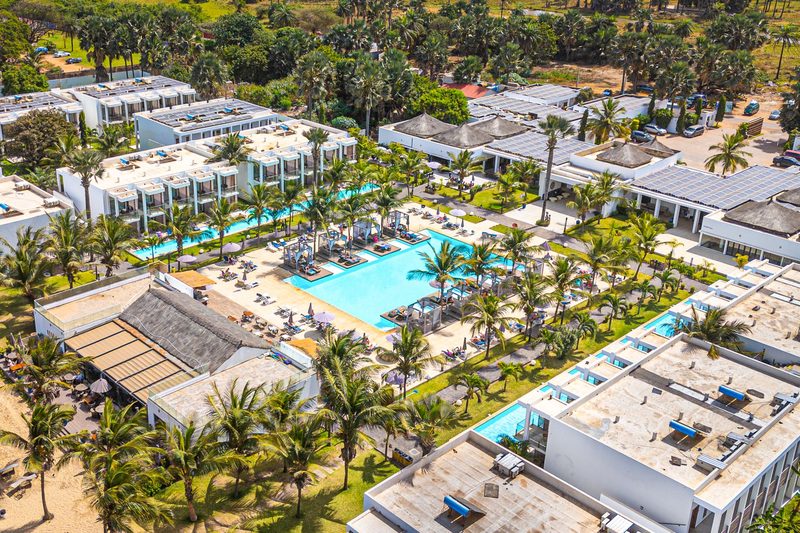
Where to Stay in Gambia in April
Hand-picked hotels across price tiers for April travellers.
Public Holidays in April
Dates that affect opening hours, transport and crowds
Good Friday
Observed nationwide as a public holiday.
Easter Monday
Observed nationwide as a public holiday.
Packing Checklist
Bookmark this page — your progress is saved between visits
Need the full list with shopping links?
Climate-specific gear, brand recommendations, and what to leave at home.
View Gambia Packing List →Essential Tips
Insider knowledge and common pitfalls to avoid
Insider Knowledge
The Senegambia strip, the main tourist corridor between Kololi and Kotu, quiets down noticeably in April. That works in your favour. The restaurants still open year-round serve proper Gambian food alongside the tourist menu: benachin, the local jollof rice cooked in a single pot with fish, tomato, and whatever vegetables came in that morning; domoda, a groundnut stew thick enough to hold a spoon upright. And grilled afra from the roadside charcoal stalls where the smoke reaches you before you see the vendor. The food is generally better when kitchens are not running at December volume. April pricing at most sit-down places runs softer than peak season.
Serekunda Market, about 12 km (7.5 miles) from Kololi, is Gambia's largest market and the one most travelers never see. It is louder, denser, and less tourist-oriented than Albert Market in Banjul. The fabric sections alone could take an hour. It is where Gambians shop for everything from shoes to herbal remedies to mobile phone credit. Go with a guide the first time to learn the layout. Go early. By noon it is uncomfortably hot and the crowds compact into something impenetrable.
Gambia is one of West Africa's safer destinations for tourists, and violent crime against visitors remains rare. The main irritation is the bumsters, unofficial guides who approach you on beaches and near hotels with offers of tours, taxis, or friendship. A firm, polite refusal works. Sustained eye contact or engagement is taken as an opening. The tourist police patrol the main resort areas. Most visitors travel without incident. That said, keep electronics out of sight on quiet stretches of beach after dark, and use the hotel safe for valuables.
The taxi system in the tourist areas runs entirely on negotiated fares, not meters. Always agree on the price before you get in. Ask your hotel what the going rate is for common routes. The run from Banjul International Airport to Kololi has a rough local price that is significantly lower than what drivers will quote an arriving tourist. Shared taxis along fixed routes, locally called town trips, are far cheaper but require some familiarity with where they stop.
April is the strongest month of the year for negotiating accommodation rates. Hotels that were booked solid in January are now running at a fraction of capacity. Most mid-range lodges along the coast will offer a rate below their posted price if you book directly, stay more than three nights, and ask. The all-inclusive resorts tend to hold their pricing more firmly. Even there, upgrades and extras are easier to get when the rooms are empty.
Avoid These Mistakes
Spending every day on the coast and never going upriver. The Gambia River is the country's defining feature. Skipping a boat trip upstream is like visiting Egypt and never seeing the Nile. Even a half-day mangrove creek excursion from the coast shows you a completely different Gambia: quiet, wild, and still green along the waterline even in the depths of the dry season.
Underestimating the sun because the dry heat does not feel as punishing as humid heat. In April you can burn seriously within 30 minutes of unprotected midday exposure. Because you are not drenching your shirt in sweat, the warning signs arrive late. Reapply sunscreen constantly. Wear a hat with a proper brim. Treat the hours between 11am and 3pm as rest time, not adventure time. The locals disappear indoors during those hours for a reason.
Booking every excursion from home at inflated international rates. For most Gambian day trips, Tanji, Makasutu, river creek tours, Kotu birdwatching, arranging through your hotel or a recommended local guide a day or two ahead is equally reliable and noticeably less expensive. The one exception is the cross-border Senegal safari, where the logistics of ferry tickets, border paperwork, and coordinated transport benefit from advance booking through an established operator.
Ready to plan your trip to Gambia?
Now that you've got the research covered, here's where to go next.
Explore More Activities in Gambia
Didn't see anything interesting yet?
Browse Viator's full catalog of tours, day trips, food experiences, and private guides in Gambia.
See All Gambia Tours on Viator