Things to Do in Gambia in October
October weather, activities, events & insider tips
Low Season · Budget Friendly
October Weather in Gambia
Long-run averages for October in Banjul
89°F (31°C)
High Temp
71°F (22°C)
Low Temp
3.0 inches (76 mm)
Rainfall
84%
Humidity
10
Sunny-Day UV
⚠ Malaria risk is elevated in October due to peak mosquito populations following the rainy season. Standing water in and around the Greater Banjul Area and along the river creates breeding conditions. Antimalarial prophylaxis, DEET-based repellent, and sleeping under a treated net are essential, not advisory.
⚠ Sudden heavy downpours can render unpaved roads in Serekunda, Brikama, and rural areas impassable for hours. Shared taxis and local transport may stop running during and immediately after storms. If you have a time-sensitive connection, such as a ferry or a flight, build in extra margin on days when the sky looks dark by mid-morning.
Making the most of October in Gambia? Browse tours and activities in Gambia on GetYourGuide.
Is October Right for You?
Weigh the advantages and considerations before booking
Advantages
- + The Gambian countryside hits peak green after months of rain. Rice paddies along the river road between Brikama and Soma shimmer under dramatic cloud formations. The baobabs are fully leafed out. Late afternoon light turns everything copper and gold. Landscape photographers, take note. This is your month.
- + Tourist season does not officially start until November. October pricing on accommodation in Kololi, Kotu, and the Senegambia strip sits well below peak-season rates. Several lodges and guesthouses reopen mid-October. They offer early-bird deals to fill rooms before the charter flights arrive. Smart travelers book now.
- + Birding hits a rare sweet spot. Palearctic migrants from Europe begin arriving along the Gambia River corridor. Rollers, bee-eaters, and several raptor species join the show. Resident African species like the violet turaco and grey-headed kingfisher remain active. That overlap makes October one of the richest birding months. The Gambia is already West Africa's premier birding destination. October proves why.
- + Crowds are essentially nonexistent. Abuko Nature Reserve feels unhurried. Katchikally Crocodile Pool in Bakau welcomes you without the press of bodies. Even Banjul's Albert Market breathes easier. The package-tour groups have not arrived yet. December through February changes everything. Visit now.
Considerations
- − October remains technically the tail of the rainy season. Banjul's average rainfall drops sharply from September's 10.0 inches (254 mm) to 3.0 inches (76 mm). The storms that do hit arrive as sudden, heavy afternoon downpours. Unpaved roads can flood for hours. You cannot plan a full outdoor day with total confidence. Pack patience.
- − Humidity at 84% combined with 31°C (89°F) heat creates thick, clinging warmth. Acclimatization takes two or three days. The air feels heavy from sunrise. Short walks along Kotu Beach leave you soaked through. Half a kilometre (0.3 miles) is enough. Dress accordingly.
- − Mosquito populations hit their annual peak after months of standing water. Malaria is a genuine health concern. Prophylaxis is non-negotiable. Evenings outdoors without DEET repellent and long sleeves are not advisable. Take this seriously. Your health depends on it.
Short on time in October? See day trips around Gambia on GetYourGuide.
Best Activities in October
Top things to do during your visit
October catches the Gambia at a turning point. The heavy rains that soak the country through July, August, and September, when monthly totals can top ten inches, taper sharply, dropping to around three inches across the month. The River Gambia runs high and brown, swollen with laterite sediment carried from the interior, and the mangrove creeks along the coast sit flush with their banks. Inland, the landscape is as green as it will ever get. Rice paddies south of Brikama glow an almost fluorescent emerald, cashew orchards hang heavy with fruit, and the red-earth roads between villages smell of wet clay drying in afternoon sun. Daytime temperatures hold steady near 89°F, and nights settle around 71°F. Warm enough that the breeze off the Atlantic at Kololi or Kotu Beach feels less like cooling and more like a warm hand pressing against your skin. For travelers weighing whether to visit the Gambia in October, this transitional window carries real trade-offs. The beaches along the Senegambia strip and south toward Sanyang are quieter than they will be from November onward, when the charter flights resume and the coast fills with European sun-seekers. Hotels and guesthouses operate at low-season capacity, which means fewer crowds at the crocodile pools, shorter waits at the craft markets in Serekunda, and a more unhurried pace at the restaurants along Kotu Stream. The food scene runs year-round. Grilled barracuda and ladyfish at the beachside shacks, domoda peanut stew ladled over rice at local chophouses, the sharp tang of tapalapa bread torn from a charcoal oven. October is no exception. That said, some unpaved side roads can be muddy after a downpour, and the occasional afternoon storm still rolls in with a wall of warm rain that turns the sky the color of pewter. Safety in the Gambia follows the pattern of most small West African nations. The tourist areas along the coast are well-traveled and straightforward to navigate, and the interior river towns are welcoming, though quiet after dark. What makes October distinct from the peak dry season is the quality of the light and the density of the birdlife. With the bush still lush, migrant species from Europe begin arriving along the river and the coastal wetlands, joining the resident kingfishers, sunbirds, and palm-nut vultures that patrol the bolongs year-round. The air smells green. Leaf rot, damp bark, the faint sweetness of frangipani. The sunsets over the Atlantic carry an amber depth that the haze-free skies of December never quite match.

Full-Day Safari in Senegal from Banjul
day_tripThe Full-Day Safari in Senegal from Banjul begins before dawn at the Barra ferry terminal, where the engine rumble of the aging vessel carries across the still water of the river mouth as you cross from Banjul to the north bank. From there the route pushes east into Senegal's Fathala Wildlife Reserve, a protected patch of dry forest and savannah where you track rhinos on foot through shoulder-high grass, listen to the sharp alarm calls of green monkeys overhead, and stand close enough to giraffes browsing acacia canopy to hear the wet tear of leaves from branches. The return crosses back through the border towns where Wolof and Mandinka traders sell roasted cashews in paper cones, the smoke from their braziers drifting across the road.
One of the few places in West Africa where you can walk within meters of white rhinos in a semi-wild forest setting, all reachable as a day trip from the Gambia's coast.
Insider tip: Bring a long-sleeved layer for the early ferry crossing. The river wind at 6 a.m. is cooler than you expect, and the open upper deck is the best spot to watch the Banjul skyline shrink behind you.
This month: The reserve's bush is at maximum density in October after the rains, which can make some wildlife harder to spot at distance but brings the forest to its most photogenic green.

Gambia to Senegal Tour with Ferry Crossing and Safari Park
guided_experienceThe Gambia to Senegal Tour with Ferry Crossing and Safari Park threads together three experiences that would take days to organize independently. The Barra ferry passage across the river mouth, the border crossing into southern Senegal, and a guided circuit through a safari park where you move between zones of West African wildlife. Hyenas pacing behind acacia scrub, ostriches strutting across open clearings, and the startling crack of a monitor lizard disappearing into underbrush. The ferry itself is half the story, a clanging, diesel-scented crossing where fishermen in painted pirogues slide past the hull and the salt air mixes with the smell of dried bonga fish stacked in the hold below.
It compresses an authentic cross-border West African road trip, ferry, frontier, and bush, into a single guided day, removing the logistics that would otherwise eat your time in the Gambia.
Insider tip: Sit on the port side of the vehicle heading into Senegal for the best views of the riverbank mangroves, and carry your own water since roadside stops are infrequent once you leave the main highway.

MAKASUTU - cultural forrest, Brikama
otherMAKASUTU Cultural Forest near Brikama is not a museum and not quite a nature reserve. It sits somewhere between, a palm-canopied stretch of gallery forest along a bolong creek where Jola, Mandinka, and Fula cultural practices are demonstrated in clearings beneath silk-cotton trees whose buttress roots rise taller than a person. You paddle a dugout canoe through mangrove channels where the water is black with tannin and the only sound is the drip from your paddle and the distant thud of a djembe drum. The air under the canopy is thick, warm, and smells of fermenting palm wine and damp laterite, and the filtered light through the fronds gives everything an underwater quality.
Makasutu is the closest you will get in the Gambia to experiencing the layered ecology and living culture of a West African river forest in a single, unhurried visit.
Insider tip: Request the canoe trip at the start of your visit before the tide drops. The bolong channels are navigable only at higher water, and the morning light through the mangroves is the most atmospheric.
This month: October's residual rains keep the bolong water levels high enough for the canoe excursion, which can be limited in the driest months when the creek narrows to mudflats.

Airport pickup
transportThe Airport Pickup service operating from Banjul International handles the stretch of road between the terminal and the coastal hotel strip. A corridor that first-time arrivals find disorienting after dark, when the unlit sections between Yundum and the Senegambia junction are crowded with pedestrians, donkey carts, and taxis without working headlights. A pre-arranged driver meets you at the terminal exit with signage, loads luggage into an air-conditioned vehicle, and covers the thirty-minute route while you decompress from the flight, the cool interior a sharp contrast to the wall of humid air that hits you the moment the airport doors open.
It eliminates the most chaotic stretch of any Gambia trip, the post-landing scramble at a small West African airport, and puts you in your hotel without negotiating fares in an unfamiliar currency at midnight.
Insider tip: Confirm your flight number and expected arrival time with the operator at least 24 hours in advance, since Banjul-bound flights from Europe frequently arrive late and drivers need the updated schedule.

River cruise Fishing in the Gambia Lunch Included
cruiseThe River Cruise Fishing in the Gambia folds a half-day on the water into something more layered than a standard angling trip. You motor upriver from the coast in a traditional wooden boat, the outboard throttled low, passing stretches of mangrove where pied kingfishers hover and dive in bursts of black and white. The fishing itself targets barracuda, ladyfish, and catfish using handlines and light tackle, and the catch goes straight to the boat's cook, who cleans and grills it over charcoal on the riverbank while you sit in the shade of a mangrove and listen to the pop and hiss of fish skin crisping over coals. The taste of river-caught barracuda, firm, slightly sweet, with a char from the open flame, is sharper and cleaner than anything served at the hotel buffets along the coast.
It is the most direct way to experience the River Gambia as a working waterway rather than a backdrop, with the catch-to-plate cycle closing within the same morning.
Insider tip: Bring polarized sunglasses. The river's surface glare off the brown water in late morning is intense, and spotting fish breaking the surface is nearly impossible without them.
This month: The river runs high and fast in October after the rainy season, which pushes fish closer to the mangrove margins where they are easier to reach with handlines from the boat.

South Gambia Tour - Fishing village and Paradise Beach
guided_experienceThe South Gambia Tour to the fishing village and Paradise Beach drops south from the tourist coast into a Gambia that most visitors never see. The route passes through Gunjur, where the morning fish landing is a full-sensory event. The wet slap of ladyfish hitting concrete, the shouts of women auctioning the catch in Mandinka, the metallic smell of blood and brine mixing in the equatorial heat, and the iridescent shimmer of scales on every surface. From there the trail continues to a stretch of sand south of Kartong where the Allahein River meets the Atlantic, a quiet, coconut-palm-lined shore with no sunbeds, no hawkers, and no sound beyond the crash of waves and the occasional call of a fish eagle circling overhead. The contrast between the controlled chaos of the fish landing and the emptiness of the beach an hour later is the sharpest you will find anywhere in the Gambia.
It pairs the raw, unfiltered rhythm of a working Gambian fishing village with one of the most undeveloped beaches on the West African coast, all in a single half-day circuit.
Insider tip: Wear shoes you do not mind getting wet and sandy for the fish landing. The ground is slick with water and fish guts, and flip-flops offer no grip on the concrete slabs where the catch is sorted.
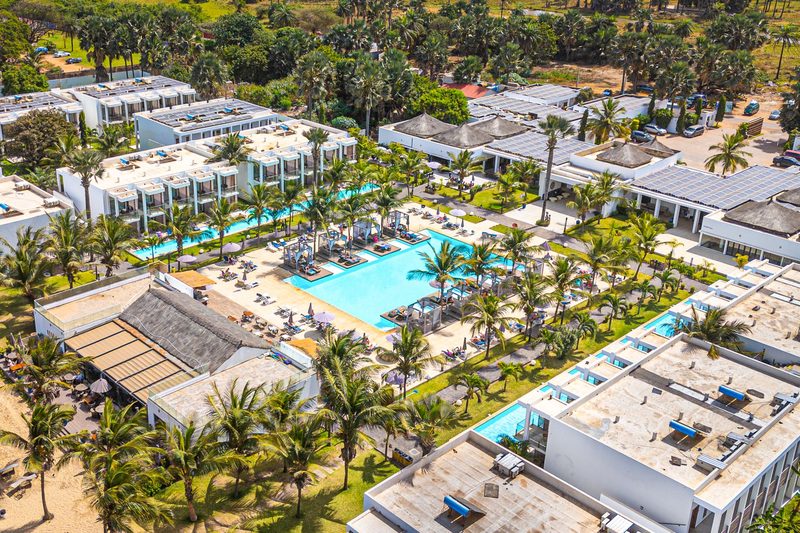
Where to Stay in Gambia in October
Hand-picked hotels across price tiers for October travellers.
Packing Checklist
Bookmark this page — your progress is saved between visits
Need the full list with shopping links?
Climate-specific gear, brand recommendations, and what to leave at home.
View Gambia Packing List →Essential Tips
Insider knowledge and common pitfalls to avoid
Insider Knowledge
The attaya ceremony, the three-round green tea ritual you will encounter in every compound and workshop, is the real social currency of The Gambia. The first glass is bitter and strong, the second sweeter, the third sweet enough to make your teeth ache. Accepting all three rounds signals that you have time, that you are not in a hurry, and that matters here far more than any phrase in Wolof or Mandinka. Refusing politely is fine. But if someone invites you to sit and drink, clear your schedule for 45 minutes and let the conversation go where it goes.
Eat where Gambians eat in October, not where tourists eat. The Senegambia strip in Kololi is half-shuttered this month and the few open spots cater to a clientele that is not there yet. Serekunda's market stalls and the cookshops along Kairaba Avenue serve domoda, a rich groundnut stew ladled over rice that carries a deep, earthy sweetness from slow-cooked peanut paste, and benachin, the original Jollof rice, smoky from the blackened base of the pot. The flavour is in the char.
Negotiate taxi fares before you get in, every single time, and agree on whether the price is per person or per vehicle. There are no meters. The shared taxis running between Banjul, Serekunda, and the coastal strip follow loose fixed routes, and joining one is dramatically cheaper than hiring a tourist taxi. But the system is invisible unless someone shows you the stops. Ask at your guesthouse.
October is the tail end of oyster season along the mangrove creeks near Lamin and Kartong. Women harvest them from the mangrove roots at low tide and smoke them over open fires on the creek banks. The smoked oysters have a concentrated, briny intensity unlike anything from a tin, and buying a bag at the source costs almost nothing. The smell of the smoking fires mixed with the salt-mud scent of the mangroves at low tide is one of the defining sensory moments of the Gambian coast.
Avoid These Mistakes
Skipping antimalarial medication because the trip is short. October's mosquito population peaks after the rains, and falciparum malaria, the dangerous strain, is present throughout The Gambia. Start your prophylaxis before you arrive and finish the full course after you leave. This is not optional, and no amount of repellent replaces it.
Arriving without sufficient cash in dalasi. Card acceptance outside the larger resort hotels is essentially nonexistent, and ATMs in Banjul and Serekunda can run empty or go offline for days, around the seasonal reopening when maintenance has been deferred. Change money at licensed bureaux in Banjul or the Senegambia area, not at the airport where rates are worse, and carry enough to cover several days of expenses at any time.
Planning a beach-only holiday for October. Kololi and Kotu beaches are functional but the sea can be rough, the sand is damp from overnight rain more days than not, and the overcast mornings that clear into humid afternoons are not the postcard conditions that arrive in November. Treat the beach as a bonus, not the plan, and build your days around river excursions, birding, and cultural visits that gain from the green landscape rather than depending on clear skies.
Ready to plan your trip to Gambia?
Now that you've got the research covered, here's where to go next.
Explore More Activities in Gambia
Didn't see anything interesting yet?
Browse Viator's full catalog of tours, day trips, food experiences, and private guides in Gambia.
See All Gambia Tours on Viator