Things to Do in Gambia in August
August weather, activities, events & insider tips
Low Season · Budget Friendly
August Weather in Gambia
Long-run averages for August in Banjul
86°F (30°C)
High Temp
73°F (23°C)
Low Temp
13.7 inches (348 mm)
Rainfall
87%
Humidity
12
Sunny-Day UV
⚠ August tops the malaria risk chart. Peak breeding in standing water guarantees this. Antimalarials, DEET, and treated nets are essential. Not optional. Act accordingly.
⚠ Heavy rain floods low roads fast. Laterite tracks outside the Banjul-Basse corridor suffer most. Flash floods hit Banjul's outskirts and Kanifing regularly. Drainage is basic. Plan routes carefully.
⚠ The Atlantic turns rough in August. Strong currents increase. Check conditions before swimming at Kotu Beach, Kololi Beach, or Sanyang. Undertows strengthen now. Rip currents intensify. Lifeguards are scarce. Often absent. Respect the water.
Making the most of August in Gambia? Browse tours and activities in Gambia on GetYourGuide.
Is August Right for You?
Weigh the advantages and considerations before booking
Advantages
- + Rock-bottom accommodation rates and nearly empty tourist areas along the Kololi and Kotu strips mean you can negotiate stays at places that would cost several times more during the November to April high season. You will likely have restaurant terraces and poolside loungers entirely to yourself. The savings are substantial. The solitude is real.
- + The landscape transforms into something unrecognizable from dry-season photographs. The scrubby Sahel bush around Banjul turns electric green. Rice paddies flood into mirror-still sheets between Brikama and Soma. The mangrove creeks around Lamin Lodge swell to the point where you can glide a pirogue through channels that are bone-dry mud banks in March. The transformation is dramatic. Bring your camera.
- + Resident bird species are in full breeding plumage and nesting actively along the Gambia River and in the Abuko Nature Reserve. August is one of the most rewarding months for serious birdwatchers who do not need the European winter migrants that arrive later in the year. The colors are spectacular. The activity is constant.
- + You experience Gambia as Gambians live it. The farming season is in full swing. Village life revolves around rice planting and groundnut cultivation. Markets in Serekunda and Brikama overflow with fresh mangoes and baobab fruit. The tourist-facing performance of the dry season is entirely absent. This is the real Gambia. Embrace the rhythm.
Considerations
- − August is the single wettest month of the year in Gambia. Banjul records an average of 13.7 inches (348 mm) of rainfall and humidity hovers around 87 percent. Downpours tend to arrive in heavy, concentrated bursts, often in the late afternoon or evening. They can last for hours and leave roads temporarily impassable, the laterite tracks upcountry between Janjanbureh and the Wassu Stone Circles. Plan accordingly. Check conditions daily.
- − Mosquito populations peak during the rains. August carries the highest malaria transmission risk of the calendar year. Prophylaxis is not optional. You will want a room with functioning screens or a treated bed net even in the coastal tourist zone around Senegambia. Do not skip this. Your health depends on it.
- − Many tourist-oriented restaurants, excursion operators, and guesthouses along the Kololi strip and Kotu Beach either close entirely or operate on reduced schedules from June through September. You will find fewer organized tours running, fewer boats available for river trips, and a general sense that the hospitality infrastructure is in its off-season dormancy. Call ahead. Confirm everything.
Short on time in August? See day trips around Gambia on GetYourGuide.
Best Activities in August
Top things to do during your visit
August hits Gambia at the wet season's absolute peak. The River Gambia swells against its mangrove-choked banks. Laterite roads in the countryside turn rust-stained ochre. Average highs sit around 30°C. Lows dip to about 23°C. The air carries thick, close warmth from dawn past sundown. Rainfall reaches its annual maximum, roughly 348 millimetres across the month. Powerful afternoon downpours hammer the corrugated rooftops of Serekunda's market stalls. Water drains into muddy rivulets along the gutters. Mornings often begin with brief, pearly calm. Mist lifts from the bolongs. Egrets shake water from their wings. Charcoal smoke from early cooking fires drifts across compounds. By mid-afternoon the sky darkens to bruise-grey. It splits open with equatorial force. Within an hour the sun returns. Every puddle becomes a mirror. Is Gambia safe and worth visiting in August? The honest answer: August sits squarely in low season. This brings rewards and trade-offs. Hotel availability along Kololi and Kotu Beach strips is wide open. Guesthouses are far more willing to negotiate. The beaches themselves, normally among West Africa's most appealing with fine tawny sand and warm Atlantic surf, look different now. The sea runs muddier where the river mouth pushes sediment seaward. Some stretches are littered with storm-washed seaweed. But the upcountry landscape is at its most intensely green. The birdlife is extraordinary as Palearctic migrants overlap with resident species. Everyday Gambian life continues uninterrupted: women pounding coos in wooden mortars, boys fishing in flooded rice paddies, the sweet tang of baobab juice sold from roadside calabashes. Restaurants in Senegambia and Banjul catering primarily to package tourists may operate reduced hours. Local chop shops thrive year-round. Try domoda, a groundnut stew with deep, earthy richness. Try benachin, the Gambian jollof stained red with tomato and palm oil, fragrant with dried fish and scotch bonnet. Try supakanja, an okra soup with slippery, savoury depth that clings to every grain of rice. Gambian food at its best is forthright and generous. August changes nothing about that. Getting around upcountry requires patience. Roads between major towns are paved. Secondary routes can become impassable in heavy rain. The Barra ferry, the crossing point between Banjul and the North Bank, runs on its own unhurried schedule regardless of season. Where you stay matters. The coastal strip from Kololi to Kotu Beach offers the most reliable infrastructure. Lodges deeper inland provide a rawer, more immersive experience. They may involve long drives on sodden tracks. Gambia is small enough that a full-day excursion can take you from the Atlantic coast to a wildlife reserve on the Senegalese border and back before nightfall. Several of the best experiences available lean into exactly that geography.

Full-Day Safari in Senegal from Banjul
day_tripThe Full-Day Safari in Senegal from Banjul loads you onto a vehicle early in Banjul. It threads south through Gambia's patchwork of cashew orchards and rice fields before crossing into Senegal. There the bush opens into dry deciduous woodland punctuated by baobabs. Their trunks look swollen with centuries of stored rainwater. The reserve harbours rhinos, giraffes, and several antelope species roaming in enclosures large enough to feel wild. The silence between animal sightings is broken only by the rasp of weaver birds and the crack of branches underfoot. In August, vegetation is at maximum density. Spotting game becomes a more patient exercise. The landscape itself is arresting. Every shade of green from lime to bottle presses in on the track.
A single day delivers a cross-border safari experience. It pairs Gambia's intimate scale with Senegal's larger wildlife reserves. No internal flight or overnight stay required.
Insider tip: Bring a waterproof bag for your camera gear. Afternoon storms materialize fast once the vehicle is in open bush. The humidity alone fogs lenses within minutes.
This month: August's heavy rainfall turns the reserve's bush thick and lush. Animal sightings are harder to spot at distance. The intensely green landscape rewards visitors, absent during the dry season.

Gambia to Senegal Tour with Ferry Crossing and Safari Park
guided_experienceThe Gambia to Senegal Tour with Ferry Crossing and Safari Park begins with one of West Africa's most characterful transport experiences. The Barra ferry from Banjul chugs across the wide brown mouth of the River Gambia. Vendors circulate with bags of roasted groundnuts. The salt-tinged wind whips off the estuary. Once on the North Bank, the route crosses into Senegal toward a wildlife park. You walk among habituated animals in a setting that feels more like a private concession than a tourist circuit. The crunch of dry leaves underfoot. The low rumble of a nearby hippo. The sharp, acrid scent of wild animal dung. These ground the experience in sensory immediacy.
The ferry crossing alone is worth the fare. It is Gambia's most storied commute. The safari park on the Senegalese side adds large mammals that the tiny country itself cannot harbour.
Insider tip: Board the ferry early. Stake out a spot on the upper deck's railing. The lower vehicle deck is diesel-fumed and stifling. Topside gives unbroken views of Banjul's low skyline receding across the water.

MAKASUTU - cultural forrest, Brikama
otherMAKASUTU - cultural forrest, Brikama sits along a tidal creek in gallery forest southeast of Brikama. The canopy closes overhead. The air drops several degrees. It is thick with the smell of damp leaf litter and the chittering of red colobus monkeys. Dugout canoe rides through the mangroves reveal fiddler crabs by the thousand. Their single oversized claws snap open and shut in eerie unison. On shore, local guides demonstrate palm wine tapping, kora playing, and traditional dyeing techniques using indigo vats. These stain the fingers a deep, stubborn blue. The forest feels ancient and enclosed. It is a rare pocket of primary vegetation in a country where much of the original woodland has been cleared for groundnut farming.
Makasutu is the most atmospheric cultural site in Gambia. It combines genuine forest ecology with living craft traditions. The setting feels completely removed from the coastal tourist strip.
Insider tip: Wear shoes you do not mind getting muddy and wet. The creek-side trails flood easily in August. The canoe embarkation point is a slippery scramble down a clay bank.
This month: August's high water levels mean the mangrove creeks are fully navigable by canoe. Channels open that are too shallow in the dry months from November through April.

Airport pickup
transportThe Airport pickup service meets you at Banjul International Airport. It is a modest terminal. The warm, diesel-scented air hits you the moment you step onto the tarmac. The service delivers you to your hotel along the coastal strip or deeper into the country. In August, international arrivals thin to a trickle. The usual crowd of unlicensed taxi drivers dwindles. Having a confirmed pickup waiting with your name on a board eliminates the one stressful moment of arriving in Gambia: the negotiation gauntlet between the terminal doors and the car park.
A pre-arranged transfer removes the single most chaotic element of arriving in Gambia. This matters in the wet season when roads are unpredictable and fewer taxis operate.
Insider tip: Confirm your pickup the day before your flight lands. Mobile network coverage around the airport can be patchy. A quick message via WhatsApp to your operator ensures the driver is there when you clear customs.

South Gambia Tour - Fishing village and Paradise Beach
guided_experienceThe South Gambia Tour - Fishing village and Paradise Beach heads south from the tourist strip into a Gambia that most visitors never see. Fishing villages display pirogues painted in sun-faded blues and greens lining the shore. The air is dense with the salty, fermented smell of drying bonga fish spread across wooden racks. The tour typically includes a stop at a beach on the southern coast. The sand is pale there. The Atlantic breaks in long, rolling sets. The only footprints are those of sandpipers and ghost crabs. Wading into the surf, you feel the undertow pull at your ankles with cool, persistent strength. This is open ocean. Not a resort lagoon.
This tour delivers the unvarnished Atlantic coast. Working fishing culture and empty shoreline. The Kololi and Kotu Beach hotel strips have long since polished these away.
Insider tip: Bring a bandana or scarf to cover your nose near the fish-drying racks. The smell is powerful and pervasive. You will be standing close while the guide explains the process.
This month: August seas run rougher than usual along the southern coast. Swimming may be inadvisable on days with heavy swell. Check conditions with the guide before entering the water.

Safari adventure at Fathala Wildlife Reserve in Senegal
otherThe Safari adventure at Fathala Wildlife Reserve in Senegal crosses the border into Senegal's Fathala reserve. This is a concession carved out of the Sine-Saloum Delta's dry woodland. Red earth paths are flanked by termite mounds taller than a person. The air hums with cicada song. Walking safaris bring you within a few metres of white rhinos. Close enough to hear the wet, heavy sound of their breathing. Close enough to see the mud caking on their flanks in the afternoon heat. Giraffes browse the upper canopy with unhurried elegance. The birdlife is dense: hornbills, starlings with iridescent plumage flashing copper and violet, fish eagles calling from the riverine fringe.
Fathala offers the closest thing to an East African walking safari in West Africa. Large mammals at arm's reach. A forest setting that feels remote.
Insider tip: The walking sections can be muddy and slippery after rain. Sturdy closed-toe shoes with grip are essential. Not the sandals that suffice on the Gambian beach strip.
This month: The reserve's vegetation is at its densest in August. Sightlines through the bush are shorter. The lush greenery and active birdlife compensate. The rhinos tend to stay on the cleared paths where they are easier to approach.
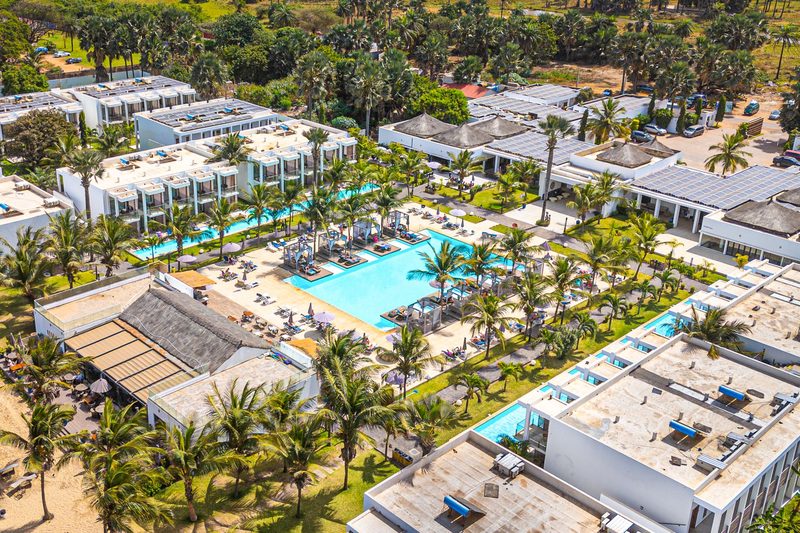
Where to Stay in Gambia in August
Hand-picked hotels across price tiers for August travellers.
Public Holidays in August
Dates that affect opening hours, transport and crowds
Assumption Day
Observed nationwide as a public holiday.
Assumption Day
Observed nationwide as a public holiday.
Packing Checklist
Bookmark this page — your progress is saved between visits
Need the full list with shopping links?
Climate-specific gear, brand recommendations, and what to leave at home.
View Gambia Packing List →Essential Tips
Insider knowledge and common pitfalls to avoid
Insider Knowledge
The rain in August tends to follow a pattern that locals plan their entire day around. Mornings are often bright and hot. The sky builds through midday. The heaviest downpours hit between roughly 3 PM and 7 PM. Gambians use the morning window for all outdoor errands and socializing, then retreat indoors during the storms. Follow the same rhythm. You will find August far more manageable than it looks on paper.
Serekunda Market, the largest in the country, is at its most interesting during the rains because the seasonal produce shifts dramatically. Mangoes from the interior flood the stalls in enormous quantities, alongside baobab fruit with its chalky, citrus-sour pulp and fresh sorrel leaves that vendors sell in bundles for making wonjo, the deep-red hibiscus drink that Gambians serve ice-cold as a natural coolant. Ask a fruit seller to choose your mangoes for you, rather than picking them yourself. This is both a courtesy and a guarantee of getting ripe ones.
The bumsters, those freelance guides who work the Senegambia strip and Kotu Beach, thin out considerably in August. Tourist numbers drop, so the guides still hustling tend to be sharper and more useful than pushy. Agree on terms upfront. Stay polite but firm when declining. Ambiguity invites persistence.
Headed upcountry to Janjanbureh, the Wassu Stone Circles, or River Gambia National Park? Confirm road conditions first. Your hotel or a local contact can advise. The Banjul to Basse highway stays open year-round. Secondary laterite roads do not. Sustained rain can trap you for days. A 4x4 is not optional in August. It is mandatory off the tarmac.
Avoid These Mistakes
Do not cancel your trip. August rain hits hard and fast, then clears. Mornings stay dry and hot. Even stormy days offer multi-hour breaks. The month is not a washout. It is concentrated wetness. Travelers who grasp this win.
Skipping malaria pills is a mistake. Coastal hotels do not protect you. Standing water, heat, and August humidity breed mosquitoes everywhere. Hotel gardens included. Beachfront compounds too. Start prophylaxis early. Finish the full course after departure. Non-negotiable.
Leave the beach gear home. August is not beach season. The Atlantic churns. Sand turns rain-pocked and debris-strewn. Grey skies erase the January brochure look. Expect disappointment otherwise. Come for green landscapes, full rivers, and real culture instead. That delivers.
Ready to plan your trip to Gambia?
Now that you've got the research covered, here's where to go next.
Explore More Activities in Gambia
Didn't see anything interesting yet?
Browse Viator's full catalog of tours, day trips, food experiences, and private guides in Gambia.
See All Gambia Tours on Viator